


Wildlife conservation isn’t just about saving cute pandas – it’s a tool-kit of of strategies that actually work.
Protected habitats, legal frameworks, and species-specific programs form the backbone of successful conservation. Smart tech like satellite tracking helps monitor threatened populations, while citizen science gets regular folks involved. Anti-poaching initiatives and sustainable practices are making a real difference.
Without urgent action, some species will vanish forever. The full story reveals how we’re fighting back.


Earth’s wildlife is disappearing faster than a toupee in a hurricane, and we’ve finally reached the point where band-aid solutions just won’t cut it anymore.
The time has come for thorough wildlife conservation strategies that actually pack a punch, not just another round of feel-good policies that look pretty on paper but achieve bugger all in reality.
Let’s start with the obvious – habitat protection isn’t just some tree-hugger’s pipe dream, it’s the cornerstone of keeping our wildlife from going the way of the dodo. National parks and reserves are doing the heavy lifting here, but they’re only part of the puzzle. We’re talking about creating wildlife corridors that connect these safe havens, because isolated populations are about as useful as a chocolate teapot when it comes to species survival. Oregon’s nine diverse ecoregions provide unique conservation challenges and opportunities for protecting wildlife across the state. Native species reintroduction has become a crucial component of successful habitat restoration efforts. Efforts, such as the establishment of habitat corridors, are vital for facilitating animal movement and genetic exchange between fragmented populations.
Protecting habitats isn’t optional – it’s make-or-break for wildlife survival. Scattered populations might as well wave goodbye to their future.
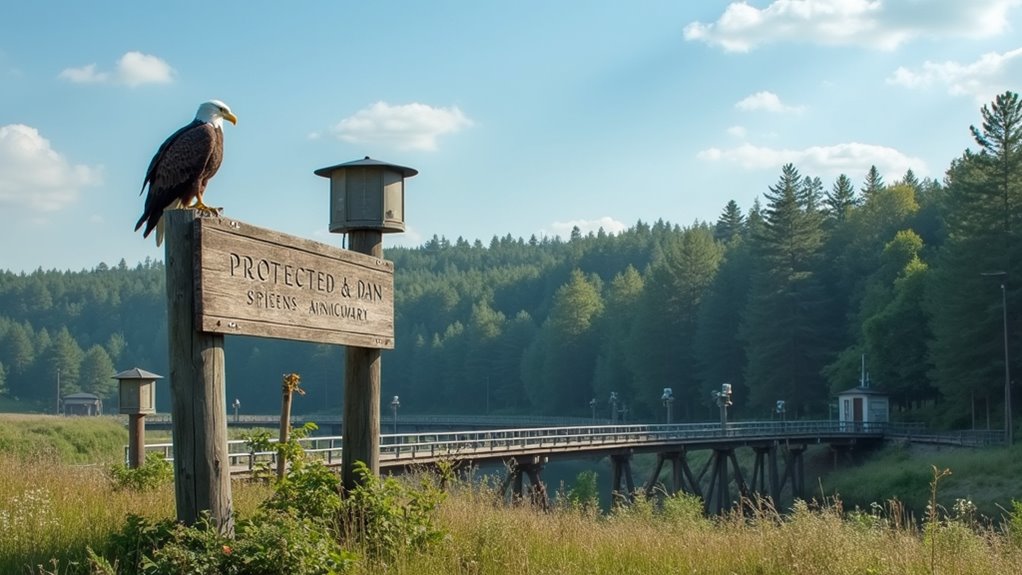
The legal framework supporting these efforts is finally growing some teeth. International agreements like CITES are cracking down on wildlife trafficking, while local regulations are making it harder for developers to bulldoze their way through essential ecosystems. Robust legal frameworks can ensure accountability in enforcing these measures, encouraging funding and fostering global cooperation in wildlife protection. But let’s be real – without proper enforcement, these laws are about as effective as a screen door on a submarine.
Anti-poaching initiatives have also proven to be a critical aspect of wildlife protection, employing technology and community involvement to safeguard vulnerable species. Empowering Indigenous leadership in these initiatives has shown to enhance conservation success, utilizing traditional knowledge and stewardship for effective protection and management.
Species-specific conservation programs are getting creative with their approaches. Breeding programs are giving endangered species a fighting chance, while artificial habitats are providing temporary digs for displaced critters. It’s not exactly five-star accommodation, but it’s better than extinction.

And speaking of unwanted guests, invasive species management is vital – these biological bullies need to be shown the door before they wreck the joint.
The agricultural sector’s finally cottoning on to sustainable practices, implementing integrated pest management and agroforestry systems that don’t treat the environment like a disposable nappy. Smart urban planning is also stepping up, though some cities are still spreading like mould on forgotten bread in the back of the fridge.
Research and monitoring have gone high-tech, with everything from satellite tracking to DNA analysis helping us understand what’s really going on out there. Citizen science programs are getting regular folks involved, proving that you don’t need a PhD to contribute to conservation efforts (yes, that typo was intentional).

Public education and awareness campaigns are working overtime to get people to give a damn, while ecotourism is showing that wildlife is worth more alive than dead. The funding piece of the puzzle is finally falling into place too, with public-private partnerships and corporate sponsorships helping to foot the bill for conservation initiatives.
It’s a complex web of strategies, but that’s what it takes to keep our wildlife from circling the drain. The solutions are there – we just need to stop mucking about and implement them properly. After all, once these species are gone, they’re gone for good, and no amount of clever scientific wizardry is going to bring them back.
Frequently Asked Questions
How Can Individuals Contribute to Wildlife Conservation in Their Local Communities?
People can make a real difference locally – it ain’t rocket science.
Plant native species, rip out those pesky invasive weeds, and create wildlife-friendly spaces with food and shelter.

Get involved with restoration projects and support conservation groups that actually know what their doing.
Share knowledge, advocate for better policies, and volunteer time.
Simple actions add up. The planet’s struggling – time to stop whinging and start doing.
What Role Does Technology Play in Modern Wildlife Conservation Efforts?

Technology’s revolutionising wildlife conservation, and it’s about bloody time.
Drones with thermal imaging catch poachers red-handed, while GPS collars track animals’ every move.
AI’s getting scary good at spotting species in camera traps, and eDNA sampling‘s exposing who’s lurking in waterways.

Even satellites are keeping tabs on habitat changes from space.
Sure beats the old days of blokes with binoculars.
The future’s here, and it’s giving wildlife a fighting chance.
How Do Climate Change Impacts Affect Current Conservation Strategies?

Climate change is royally messing up traditional conservation plans.
Let’s face it – those nice protected areas? Useless when animals gotta book it north to survive.
Species are playing musical habitats, while conservationists scramble to keep up. The old “fence it off and forget it” approach is dead as a dodo.
Here’s the kicker: conservation now needs fluid boundaries and climate-proof corridors.
Static solutions won’t cut it when Mother Nature’s gone rogue. Time to get creative or get left behind.
Which Conservation Projects Have Shown the Most Success Globally?
Let’s cut to the chase – panda conservation is the rockstar success story here. From a measly 1,000 in the 70s to nearly 2,000 today? That’s what happens when you actually get serious bout saving species.
Marine life’s making a comeback too – humpback whales exploded from 5,000 to 80,000 globally.
And Nepal? Those tigers nearly doubled in just 9 years. Goes to show what proper funding and habitat protection can do when we stop mucking around.
What Are the Economic Benefits of Investing in Wildlife Conservation?
Wildlife conservation isn’t just about warm fuzzy feelings – it’s an economic powerhouse. The numbers don’t lie: $120 billion yearly from wildlife tourism alone, supporting over 860,000 private sector jobs.
It’s not rocket science – protecting ecosystems delivers massive returns through pollination ($30B annually), flood control (up to $72k per acre), and property value boosts.
Plus, preserved habitats save billions in infrastructure costs. Conservation pays for itself, mate – that’s just cold hard facts.