
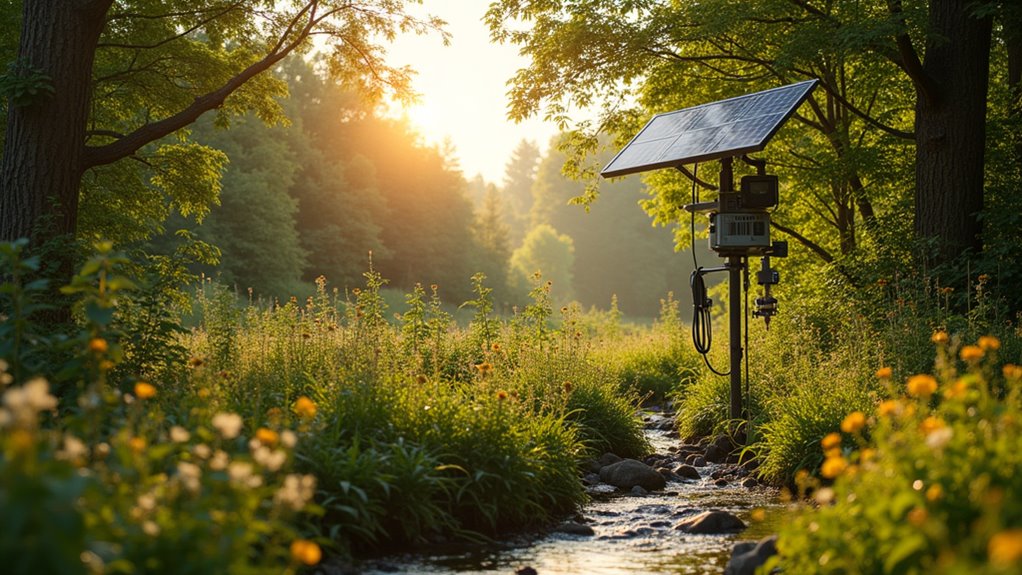

Conservation funding isn’t just about holding out a hat anymore. Today’s environmental warriors have multiple weapons in their arsenal – from government grants dishing out billions to private sector heavyweights throwing serious cash at green initiatives. The American System of Conservation Funding alone has distributed over $9 million since ’91, while hunters and anglers contribute a whopping $3 billion yearly. Public-private partnerships are revolutionising how projects get funded, but there’s more to this story than meets the eye.

While environmental challenges continue to mount globally, the landscape of conservation funding remains a complex web of government grants, private donations, and market-based schemes that would make any bureaucrat’s head spin.
Let’s face it – money makes the conservation world go round, and right now, there’s a dizzying array of ways to fund critical projects that actually make a difference. The combination of traditional fundraising and innovative market approaches has transformed how conservation gets financed.
Conservation needs cash to thrive, and today’s funding landscape offers a maze of opportunities for those willing to navigate it.
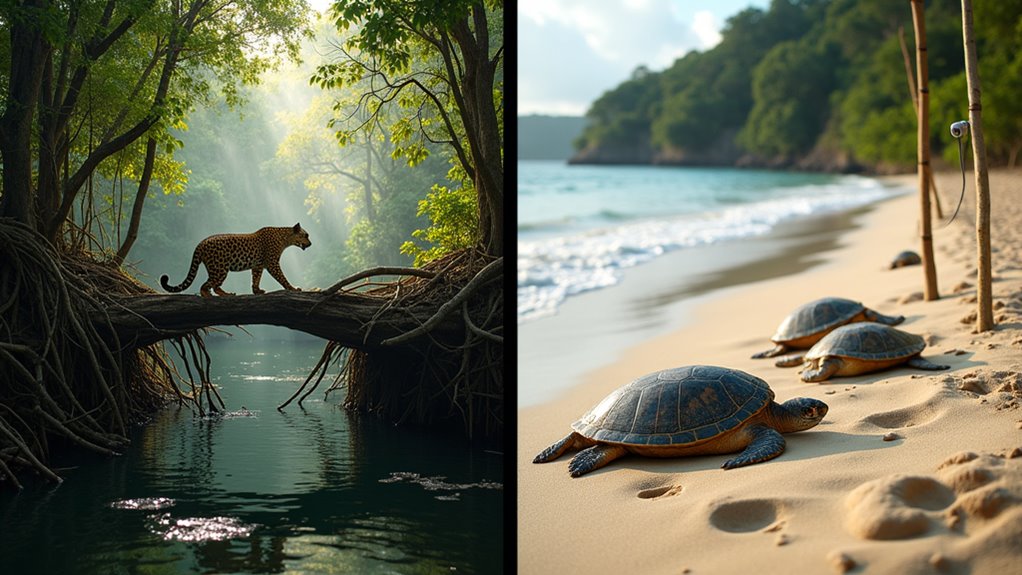
The American System of Conservation Funding is a prime example of how to get things done, even if it’s not exactly sexy. Since 1991, over $9 million has been distributed to support nearly 500 vital conservation projects worldwide. Hunters and anglers fork over cash through licenses and gear taxes, generating a whopping $3 billion annually. It’s a “user pay, public benefit” model that works, despite what some tree-huggers might think about hunting. The truth is, these folks are bankrolling professional wildlife management while the rest of us just post pretty nature photos on Instagram.
Government grants are another heavy hitter in the conservation game. The Wildlife Restoration Act and Sport Fish Restoration Act dole out funds based on state size and licence numbers – beautifully boring but effective. Meanwhile, the EPA‘s throwing around $4 billion a year like confetti at an environmental parade. Global efforts such as CITES play a crucial role in safeguarding threatened wildlife by regulating international trade, ensuring that funding and legislative measures align globally. Transitioning to renewable energy sources is an integral part of these global efforts to reduce the carbon footprint and mitigate climate change impacts. Successful strategies for conservation often highlight the importance of integrating local communities in these initiatives to ensure long-term sustainability.
But here’s the kicker – these grants often come with more strings attached than a puppet show. International agencies also contribute significantly, with the Global Environment Facility being one of the largest funders of environmental projects around the world.

The private sector‘s getting in on the action too, and not just for the tax write-offs. Disney’s Conservation Fund proves even the House of Mouse has a green conscience, while organisations like the National Fish and Wildlife Foundation are competing to throw money at worthy projects.
Conservation Trust Funds have spread to over 50 countries worldwide, creating endowments that keep the conservation cash flowing long-term.
Market-based mechanisms are the new kids on the block, and they’re shaking things up. Carbon offset credits, green bonds, and those fancy “payments for ecosystem services” are turning conservation into a proper business proposition. Some might call it putting a price tag on nature, but if it saves forests and wildlife, who’s complaining?
The real game-changers are the emerging trends in conservation finance. Crowdfunding platforms are democratising conservation funding, while blockchain technology is promising to make everything more transparent (or more complicated, depending on who you ask).
Public-private partnerships are becoming the norm, because apparently, we’ve finally realised that neither government nor private sector can tackle this mess alone.
The bottom line? Conservation funding isn’t just about government handouts anymore. It’s evolved into a sophisticated ecosystem of financial tools and strategies.

Sure, maneuvering this landscape might be harder than herding cats, but at least there’s money out there for those willing to jump through the right hoops.
And let’s be honest – in a world where every dollar counts, knowing where to find the cash is half the battle.
Frequently Asked Questions
How Long Does the Grant Application Review Process Typically Take?
Grant reviews are painfully slow – let’s be real.
Simple ones take 10-20 hours, while complex government proposals can drag on for 100+ hours.

Foundation grants? 30 days to 18 months.
Federal grants are even worse, taking 6-9 months to process.
The whole thing’s a bureaucratic mess, dependant on proposal complexity, preparedness, and how swamped reviewers are.

Honestly, the system’s about as efficient as a chocolate teapot.
What Happens if Project Costs Exceed the Approved Grant Amount?
When project costs blow past the grant amount, it’s not pretty.
Organizations must immediately flag the overrun to the funding agency – no sweeping it under the rug.

They’ll need rock-solid documentation explaining why costs spiralled (and “oops, we messed up” won’t cut it).
Without proper justification, they’re stuck eating the extra costs or scrambling to find more money.
For small projects, there’s a 60-day window to appeal.

Bottom line: cost overruns can absolutely wreck the project’s value.
Can Multiple Organizations Collaborate on a Single Conservation Grant Application?
Absolutely mate – multiple organisations can team up on conservation grant applications.
It’s a no-brainer really. Groups can pool their expertise, resources and connections to tackle bigger projects.
Most grant programs actually love seeing collaborative efforts these days.
Sure, it requires clear communication and formal agreements between partners, but the payoff is worth it.
You get diverse skillsets, wider geographic reach, and frankly, a better shot at securing that funding.
Are International Conservation Projects Eligible for Domestic Funding Programs?
Most U.S. domestic funding programs have strict rules about international projects – it’s not a free-for-all.
USAID and Fish & Wildlife Service are the main players for overseas conservation, while domestic programs usually keep dollars at home.
Sure, there’s wiggle room if you’ve got a U.S.-based organisation in the mix, but don’t count on tapping into purely domestic funds.
The system’s set up to prioritise local conservation – like it or not.
How Often Can an Organization Apply for the Same Conservation Grant?
reapplication rules are all over the bloody place.
Some grants let you have another crack annually, while others make you cool your heels for 1-3 years after scoring funds.
Its not a one-size-fits-all situation. Multi-year grants typically won’t let you double-dip with concurrent applications.
Smart orgs check each program’s fine print – because missing those eligibility rules is a rookie mistake that’ll get your application binned faster than yesterday’s brekkie.