


Current marine conservation efforts are falling flat on their face. Only 7% of marine environments have any protection, while 17 million metric tonnes of pollution choke our oceans yearly. The Great Barrier Reef‘s supposed protection since 1975 hasn’t stopped its deterioration, and a third of global fish stocks are already depleted. Even community-based efforts and eco-tourism schemes barely scratch the surface of what’s needed. The deeper you go into ocean conservation, the uglier the truth becomes.

While politicians keep making empty promises about saving our oceans, the stark reality is that marine conservation efforts are struggling to keep pace with the devastation we’re inflicting on our blue planet. With a measly 7% of marine environments under protection and over a third of global fish stocks already depleted, we’re watching our oceans die in real time. California has implemented the Marine Life Protection Act to preserve its coastal resources, making it the second-largest MPA network globally.
Let’s get real about coral reefs – these underwater metropolises support a quarter of all marine species, yet we’re cooking them alive. The Great Barrier Reef might’ve been protected since 1975, but fat lot of good that’s done when ocean acidification is 30% higher than pre-industrial times. Climate change, pollution, and overfishing are smashing these ecosystems like a sledgehammer to fine china. The Marine Protection Atlas provides crucial data tracking these devastating changes. Effective strategies, such as anti-poaching initiatives, are crucial in safeguarding these ecosystems and ensuring their survival. Disrupted food webs due to climate change further threaten the intricate balance of marine ecosystems.
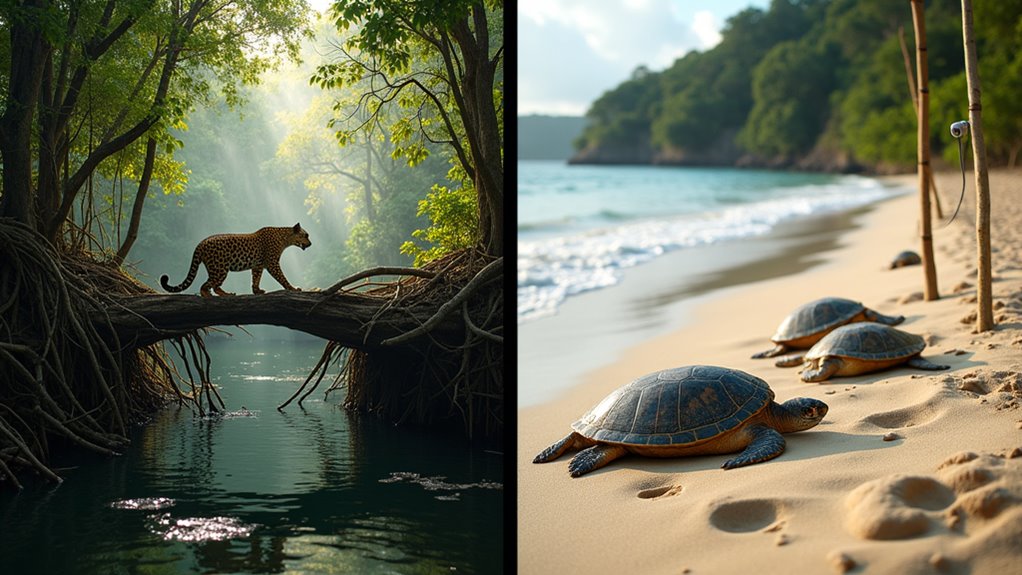
The numbers are proper shocking. We’re dumping more than 17 million metric tonnes of pollution into our oceans yearly, with plastic waste leading the toxic parade. Sure, there’s a goal to reduce marine pollution by 2025, but at this rate, we’ll be lucky if there’s anything left to save. Global campaigns are being highlighted as essential efforts to keep our seas vibrant and life-filled, working alongside local projects to address these pressing issues. It’s crucial to recognize that biodiversity hotspots, both terrestrial and marine, are essential for global health, providing ecosystem services that support life on Earth.
Meanwhile, dodgy fishing subsidies continue lining the pockets of industrial fishing operations while small-scale fishers – all 100 million of them – struggle to make ends meet.
At least some people are getting their act together. The UN’s Sustainable Development Goal 14 has sparked global cooperation, and the 2023 Biodiversity Beyond National Jurisdiction Agreement shows promise. Community-based conservation efforts in places like the Philippines are proving that local action can make a real difference.

But crikey, we need more than just scattered success stories. The push for 30% ocean protection by 2030 sounds lovely on paper, but here’s the kicker – when we close off one area, fishing effort just gets shoved somewhere else. It’s like playing whack-a-mole with environmental destruction.
Meanwhile, coral reef restoration projects are desperately trying to build climate resilience, but they’re fighting an uphill battle against warming waters and increasing bleaching events.
There’s a glimmer of hope in eco-tourism and alternative income schemes, which are helping communities see the economic value in conservation. But let’s not kid ourselves – without serious funding for ocean science and proper enforcement of protection measures, we’re just rearranging deckchairs on the Titanic.
The oceans are our planet’s life support system, acting as vital carbon sinks and biodiversity hotspots. Yet we treat them like a giant garbage bin and all-you-can-eat buffet.
The solution isn’t rocket science: we need science-based management plans, immediate action on climate change, and proper engagement with local communities. But until we stop mucking about with half-measures and start treating this crisis with the urgency it deserves, we’re just watching our oceans circle the drain.
Frequently Asked Questions
How Do Warmer Ocean Temperatures Specifically Affect Fish Migration Patterns?
Rising ocean temps are forcing fish to bail on their usual hangouts – and fast.

They’re booking it to cooler waters near the poles up to 7x quicker than land animals can adapt. Some species are literally diving deeper to escape the heat.
It’s not just a minor shuffle – entire populations are abandoning tropical waters, causing chaos for fishing communities.
Even the timing of fish breeding’s gone haywire. Talk about a proper marine exodus!
What Role Do Local Communities Play in Protecting Marine Sanctuaries?
Local communities are the real MVPs in protecting marine sanctuaries – no question about it.

They’re boots on the ground, running patrols and keeping dodgy operators in check. These legends organise reef restoration projects, clean up rubbish, and share ancient knowledge that’s bloody invaluable.
Plus, they’re not doing it for glory – their livelihoods depend on healthy oceans. When communities take charge, fish populations bounce back and coral reefs actually stand a chance.
How Long Does It Take for a Damaged Coral Reef to Recover?
Here’s the raw truth about coral reef recovery – it’s a slow, messy process that’ll test anyone’s patience.

Most reefs need around 10 years to bounce back properly, though some lucky ones might pull it off in 1-2 years if conditions are spot-on.
It depends massively on how bad the damage is and what’s happening locally.
Water quality, fish populations, and human interference all throw their weight around in the recovery game.
Can Artificial Reefs Effectively Replace Natural Coral Reef Ecosystems?
Let’s be real – artificial reefs are like cheap knockoffs of the real thing.

Sure, they provide some habitat and can boost local fish populations, but they’re covering less than 0.01% of what natural reefs do.
They’re a band-aid solution, not a replacement.
While they’re useful tools for specific situations, artificial reefs just can’t match the complex ecosystems that took nature thousands of years to perfect.

Nice try humans, but mother nature still does it better.
What Percentage of Marine Species Remain Undiscovered in Coral Reef Environments?
Let’s cut to the chase – a staggering 91% of marine species are still playing hide-and-seek in our oceans.
When it comes to coral reefs specifically, scientists reckon we’re barely scratching the surface. I mean, they found 525 different crustacean species in just 6.3 square metres of coral! That’s mental.
With 80% of our oceans still unexplored and reefs supporting a quarter of all marine life, we’re basically operating in the dark here.