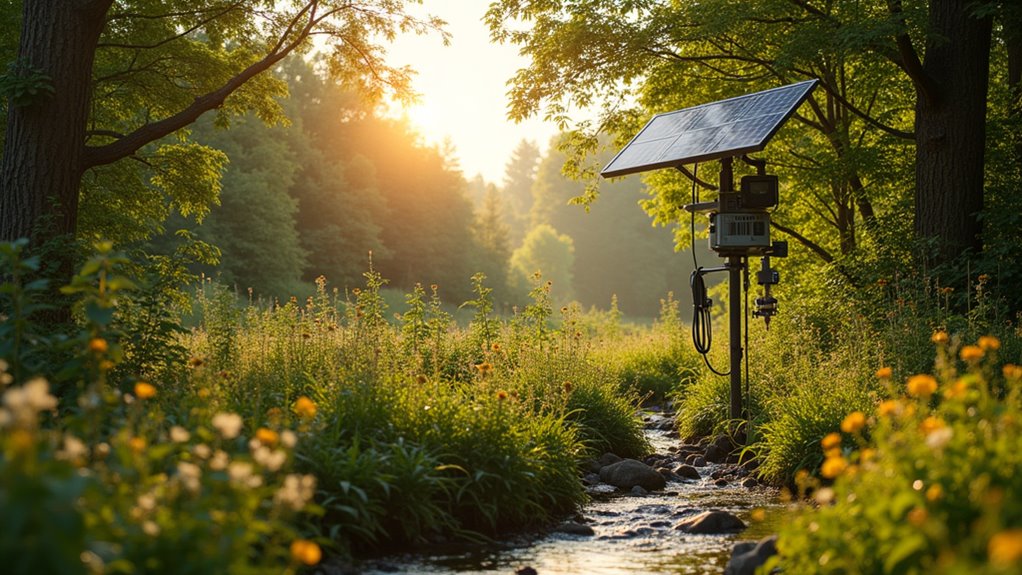


Modern forest conservation isn’t just hugging trees and hoping for the best. It’s a strategic combination of high-tech monitoring, indigenous knowledge, and community-driven actions that actually work. Global agriculture destroys 80% of forests, but smart conservation fights back with selective logging, native species restoration, and real-time satelite tracking. Local communities must lead these efforts – not just watch from the sidelines. The future of our woodlands depends on getting this complex dance right.

Countless forests worldwide are disappearing faster than a meat pie at a footy match, and it’s about bloody time we got serious about conservation. The old “plant a tree and hope for the best” approach just doesn’t cut it anymore. We need a full-throttle assault on deforestation, combining high-tech solutions with good old-fashioned boots-on-the-ground work. Agriculture accounts for nearly 80% of deforestation globally, making it the biggest threat to our forests.
Let’s face it – afforestation and reforestation are the heavy hitters in this game. It’s not rocket science: plant trees where they’ve been stripped away and restore knackered forests to their former glory. But here’s the kicker – you can’t just chuck any old sapling in the ground. Native species are vital for maintaining the delicate balance that keeps our ecosystems ticking along. With 33% of America covered in diverse forest types, we’ve got a lot worth protecting. Healthy forests provide essential services like carbon sequestration and water purification, which are crucial for climate regulation. Proactive planning in forest conservation, much like strategies for resilience against climate change, ensures we safeguard our environment for future generations. Reviving degraded forests requires removing invasive species and replanting native flora to boost biodiversity and ecosystem health.

The days of clear-cutting forests like there’s no tomorrow are done and dusted. Sustainable forest management is the new black, with selective logging practices that actually give a damn about biodiversity. Forest certification isn’t just fancy paperwork – it’s proof that we’re not completely stuffing things up. The success of anti-poaching initiatives in protecting wildlife also underscores the importance of coordinated efforts in forest conservation.
And speaking of not stuffing things up, protected areas and conservation reserves are absolute non-negotiables.
Here’s where it gets interesting – community-based forest management. Because let’s be honest, you can’t just fence off forests and tell locals to bugger off. That’s about as effective as a chocolate teapot. Smart conservation means working with communities, respecting indigenous knowledge, and making sure everyone gets a fair go at the benefits. It’s not rocket surgery, mate.

Fire management is another vital piece of the puzzle, and we’re not talking about throwing another snag on the barbie. Controlled burns, firebreaks, and early warning systems are essential.
And don’t get me started on invasive species – these unwanted guests are like party crashers who refuse to leave and trash the joint. We need aggressive control methods and constant vigilance to keep these botanical thugs in check.
The cherry on top? Technology‘s revolutionising how we protect our forests. Satellites, drones, and artificial intelligence are giving us eyes in the sky and brains in the cloud. We’re tracking changes in real-time, predicting threats before they happen, and collecting more data than you can shake a stick at.
But all this flash tech means bugger-all without proper implementation.
The bottom line is this: forest conservation isn’t some feel-good hobby for tree-huggers anymore. It’s a sophisticated, multi-pronged approach that demands serious commitment and resources.
And if we don’t get our act together soon, we’ll be left with nothing but memories of what our forests used to be. Now that would be a proper stuff-up, wouldn’t it?
Frequently Asked Questions
How Long Does It Take for a Reforested Area to Become Self-Sustaining?
Initial self-maintenance takes 2-3 years, but that’s just the start.

A proper self-sustaining forest? That’s a whole different ballgame. We’re talking 10-20 years minimum for basic ecosystem establishment, and a whopping 150-200 years for full natural maturity.
Yeah, nature takes its sweet time. But hey, using clever tricks like the Miyawaki method can speed things up a bit.
Still, there’s no magic shortcut – forests dont grow overnight.
What Role Do Indigenous Communities Play in Modern Forest Conservation Efforts?
Indigenous communities are absolute powerhouses in forest conservation today. They manage a quarter of Earth’s land surface and their territories are literally saving our butts – soaking up 340 million tonnes of CO2 yearly in the Amazon alone.

Their centuries-old knowledge of controlled burning and sustainable harvesting puts modern techniques to shame. When they get legal rights to their ancestral lands, deforestation drops by up to 66%.
Talk about results that matter.
How Do Changing Climate Patterns Affect Forest Conservation Strategies?
Climate change is throwing traditional forest conservation into chaos.
Rising temps aren’t just making trees sweat – they’re forcing entire species to leg it north or die trying.
Conservation strategies are scrambling to keep up, shifting from “preserve what’s there” to “prep for what’s coming.”
It’s proper messy – managers are now playing match-maker, deliberately moving species around and creating wildlife corridors like some ecological dating service.

The old rulebook’s gone up in smoke, literally.
What Are the Economic Benefits of Investing in Forest Conservation?
Forest conservation isn’t just tree-hugging – it’s a serious money maker.
The numbers don’t lie: it creates 20 jobs per $1M invested and the forest products industry pumps out $175B annually in the US alone.

Here’s the kicker – protected forests slash healthcare costs by removing air pollution, cut water treatment expenses by 10x, and boost nearby property values by up to 9%.
Plus, open spaces generate more tax revenue than they cost in services.
How Do Urban Forests Compare to Natural Forests in Terms of Biodiversity?
Urban forests pack more tree species than their rural cousins, but it’s not all good news.
Natural forests dominate when it comes to native biodiversity and complex ecosystems.
Sure, urban areas might support 20x more species than managed non-native forests, but they’re loaded with invasive troublemakers.
Old-growth forests are the real MVPs – they’re biodiversity powerhouses with intricate relationships that city parks can’t match.
Mother Nature’s still the boss, mate.