
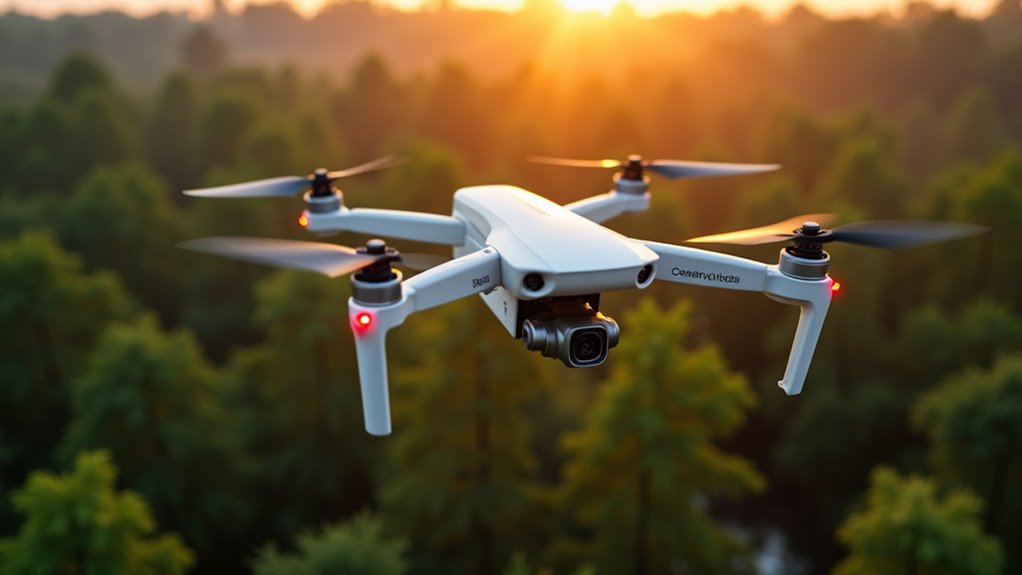

Conservation’s getting a major tech upgrade, and it’s about bloody time. Gone are the days of scribbling field notes and squinting through binoculars. Today’s wildlife warriors pack serious heat: AI-powered camera traps that ID species in seconds, drones that spot poachers from the sky, and DNA sampling that reveals hidden creatures. Sure, there’re challenges – dodgy internet in remote areas and eye-watering costs – but the future’s looking bright. The deeper you go into this tech revolution, the more mind-blowing it gets.

Conservation technology is sprinting into overdrive, transforming from clunky field tools into sophisticated systems that pack a serious punch. Let’s face it – the old days of counting critters with a notepad and binoculars are dead and buried.
Today’s conservation tech is a whole different beast, with artificial intelligence leading the charge and making traditional methods look like they belong in a museum. Camera traps offer real-time analysis and identification of wildlife species with minimal human effort. Communities and organizations are increasingly adopting proactive planning strategies to ensure that conservation technologies are effectively integrated into their efforts to protect ecosystems.
Traditional conservation’s gone the way of the dodo – AI’s running the show now, turning old-school methods into ancient history.

The real game-changer here is AI’s ability to crunch massive amounts of data faster than a caffeinated cheetah. Wildlife Insights and similar platforms are revolutionising how we process camera trap images, turning what used to be months of mind-numbing sorting into a quick digital scan. Traditional tools like radios and binoculars remain valuable backups when high-tech solutions fail.
And mate, the results are bloody impressive – these systems can identify species, track movements, and flag potential threats before your morning coffee gets cold. As we look to the future, innovative tools such as AI-driven climate modeling are reshaping the climate fight, offering new ways to understand and combat environmental changes. Successful anti-poaching initiatives are also critical in maintaining a balanced ecosystem, ensuring both wildlife and human communities thrive.
But it’s not just about fancy algorithms and smart software. Environmental DNA sampling is proving to be a proper breakthrough, letting researchers detect species without having to actually spot the buggers.

Chuck in some networked sensors and GIS mapping, and suddenly we’ve got a complete picture of what’s happening in our ecosystems. The tech’s getting so good it’s almost scary – except it’s being used to save species rather than spy on your neighbours. Tracking tools are pivotal in providing scientists and rangers with the ability to monitor endangered species and gather critical habitat data, ensuring that conservation efforts are more informed and effective.
Drones are another piece of kit that’s absolutely crushing it in the conservation game. These flying mates are equipped with high-res cameras and AI smarts, making them perfect for spotting everything from illegal logging to sneaky poachers.
They’re covering ground that’d take weeks to survey on foot, and they’re doing it without breaking a sweat or complainin’ about the weather.
Course, it’s not all sunshine and rainbows. The tech’s brilliant, but implementing it is about as easy as teaching a koala to tap dance.
You’ve got remote areas with dodgy power supply, patchy internet that’d frustrate a saint, and price tags that’d make your wallet weep. Plus, there’s the whole mess of data privacy and security to sort out – because nobody wants their conservation efforts turning into a digital free-for-all.
The future of conservation tech is looking proper fierce, though. We’re seeing AI, drones, and tracking tools working together like a well-oiled machine, creating systems that are smarter, faster, and more effective than ever before.

Sure, there’s still some wrinkles to iron out, but the potential is massive. The real trick now is getting these tools into the hands of the people who need them most, without letting budget constraints and technical barriers get in the way.
Because at the end of the day, all this flash tech is useless if it’s just sitting on a shelf collecting dust.
Frequently Asked Questions
How Much Training Is Required to Operate Conservation Drones Effectively?
Operating conservation drones isn’t a walk in the park.
Pilots need at least 40 hours of combined training – that’s the bare minimum. There’s the mandatory FAA Part 107 cert (15-20 hours), plus hands-on flight practice (25-40 hours).

Chuck in essential conservation knowledge, wildlife behaviour training, and GIS skills – it’s a proper commitment. No shortcuts here, mate.
And don’t forget the ongoing professional development – it’s a never-ending learning curve.
What Happens to Wildlife Tracking Data if the Technology Malfunctions?
When tracking tech fails, it’s a proper mess. GPS collars can die without warning, taking months of essential data to the grave.
We’re talking 5-50% catastrophic failure rates – not exactly confidence-inspiring numbers. Scientists often have to recapture animals just to retrieve their dodgy devices, causing extra stress and expense.

Worse still, wonky data from malfunctioning units can lead researchers down the wrong path entirely.
Yeah, technology’s great… when it works.
Can AI Conservation Tools Work Effectively in Areas Without Internet Connectivity?
Yes, AI conservation tools can absolutely crush it offline.
Companies like CyberTracker and Conservation X Labs have nailed the offline game with smart solutions. Their software works beautifully without internet – collecting data in the field, processing images, and syncing everything later when connection’s available.

We’re talking 96% accuracy in wildlife monitoring, even in the middle of nowhere. It’s not perfect – there’s maintenance costs and training hurdles – but it definitely gets the job done.
What Are the Ethical Considerations When Using Drones to Monitor Endangered Species?
Using drones to track endangered species raises serious ethical red flags.
Privacy’s a huge concern – that data could end up in poachers’ hands if not properly secured.

Then there’s the stress factor – drones can freak animals out, messing with their natural behaviours and potentially skewing research.
Let’s not forget indigenous communities either – their rights and traditional knowledge can’t just be ignored.
Bottom line: conservation’s important, but it shouldn’t come at the cost of ethics.
How Do Weather Conditions Affect the Accuracy of Wildlife Tracking Devices?
Weather’s a real pain for wildlife tracking tech. Heavy rain and snow can mess with GPS signals, while dense forest canopy blocks transmission – especially during summer when leaves are thick.
Extreme temps aren’t friendly either – batteries drain faster in the heat and die quicker in the cold. Wind’s another troublemaker, shaking antennas and throwing off readings.
Even clouds and humidity get in on the act, degrading signal quality.