

Earth’s ecosystems are in free-fall, with wildlife populations plummeting 70% in just 50 years. The planet’s literally cooking itself to death. But there’s hope – Pacific Northwest forests are carbon-storing champions, and nature-based solutions could tackle 30% of climate issues. Scientists aren’t mucking about anymore – they’re getting creative with wildlife corridors and assisted species relocation. Traditional knowledge’s finally getting its due, but time’s running out. The real solutions might surprise you.
The relentless march of climate change is wreaking absolute havoc on Earth’s ecosystems, and our half-arsed conservation efforts ain’t cutting it anymore. With temperatures soaring and species distributions going haywire, we’re looking at a mind-boggling 20-30% of evaluated species facing extinction. Let that sink in for a minute. Recent research shows that wildlife populations have plummeted by nearly 70% in just five decades. Our precious food webs are unravelling faster than a cheap jumper, and habitat loss is just making everything exponentially worse. It’s crucial to recognize that disrupted food webs are a consequence of these environmental changes, impacting not only individual species but entire ecosystems.
But here’s the kicker – we’ve actually got some decent solutions up our sleeve, if we’d just get our act together. The Pacific Northwest’s forests are carbon-storing champions, hoarding more CO2 per acre than anywhere else on the planet. Greenhouse gas emissions have risen dramatically since industrialization began. Protecting these old-growth beauties could slash emissions equivalent to 6-8 years worth of human activity. But no, we keep mucking about with half-measures while Rome bloody burns. Communities are adjusting infrastructure and planning proactively to safeguard both the economy and public well-being in response to these challenges.
The ocean’s copping it too, with marine species heading north like they’re late for dinner. By 2080, we’re looking at nearly half of coldwater fish habitat going up in smoke. Meanwhile, ocean acidification is turning our coral reefs into underwater ghost towns, and rising seas are flooding coastal habitats faster than you can say “climate catastrophe”. It’s a proper mess, innit?
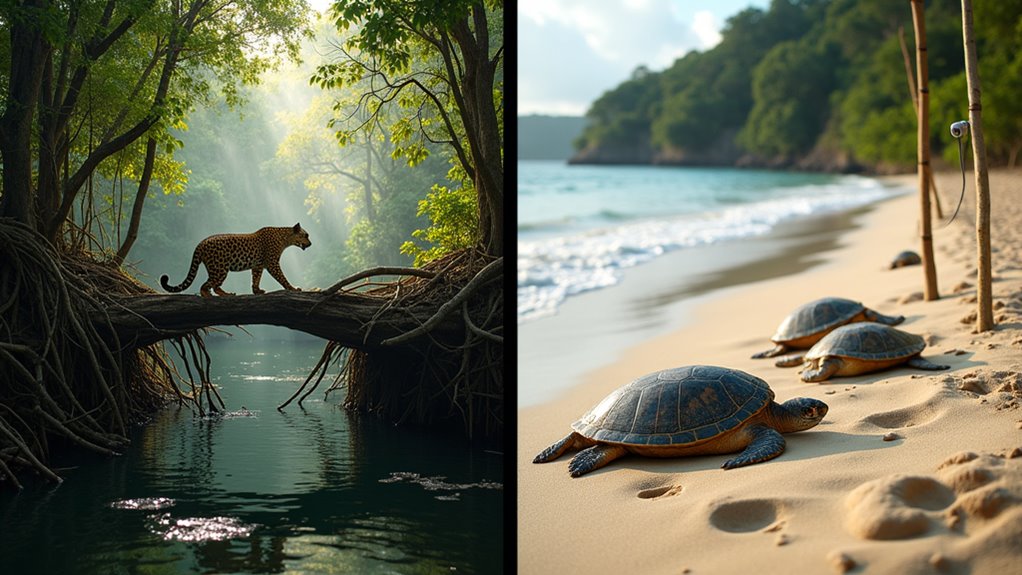
Nature-based solutions could deliver about 30% of the climate mitigation we desperately need. We’re talking about restoring knackered ecosystems, protecting carbon-rich habitats, and creating wildlife corridors so species can scarper when things get too hot. Some clever clogs are even implementing assisted colonisation for vulnerable species – basically giving them a lift to more suitable digs. A well-coordinated effort can indeed reverse ecological damage and protect what remains.
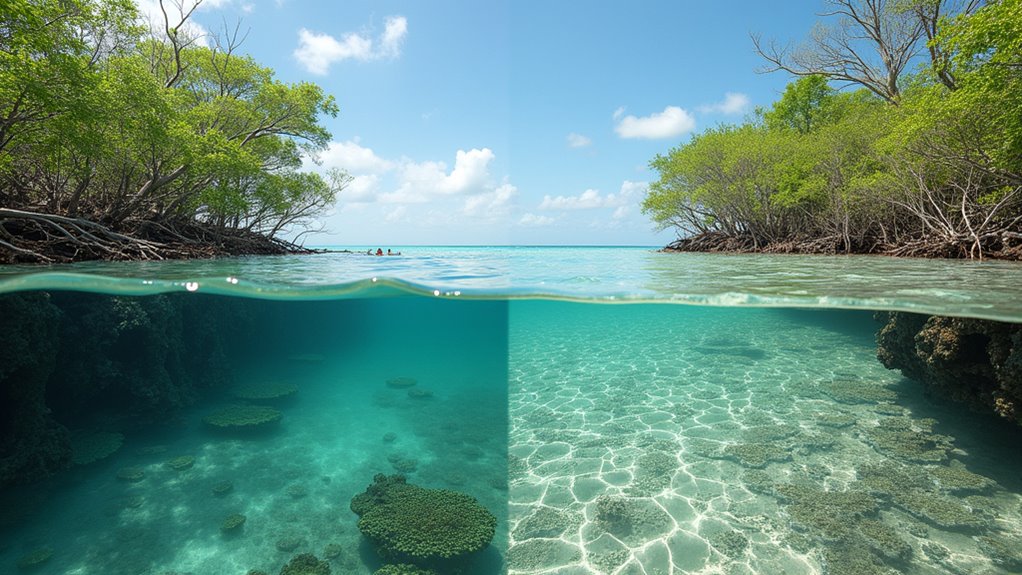
The urban jungle isn’t exempt either. Cities are finally cottoning on to the fact that green spaces do more than just look pretty – they’re essential for managing heat and keeping our air breathable. Coastal communities are wising up too, realising that healthy mangroves and coral reefs are better flood defences than any concrete wall we could build. Transitioning to renewable energy sources is also a crucial strategy in reducing urban carbon footprints and combating climate change.

But here’s the real stinger – we’re still fumbling around in the dark on some vital bits. Our climate models need work, we’re rubbish at predicting how species might adapt, and we’re still trying to figure out how to pay for all this environmental protection malarkey. Traditional ecological knowledge is finally getting some respect, but we’ve got a long way to go before we properly integrate it with scientific approaches.
The bottom line? We’ve got the tools, we’ve got the knowledge, but we’re moving slower than a koala after a big lunch. If we don’t pull our finger out and start implementing these strategies at scale, we’ll be watching our ecosystems collapse in real-time. And that’s not just bad news for the critters – it’s gonna bite us humans right in the backside too.
Frequently Asked Questions
How Do Invasive Species Affect Ecosystem Adaptation to Climate Change?
Invasive species are absolute bulldozers when it comes to messing up ecosystem adaptation.
They’re like that toxic mate who makes everything worse – outcompeting natives for resources, spreading diseases, and generally being environmental thugs.
These unwanted guests thrive in climate chaos, spreading 36% faster globally since 2005.
They’re particularly nasty in disturbed habitats after extreme weather, making it near impossible for native species to adapt.

Talk about kicking ecosystems while they’re down.
What Role Do Urban Areas Play in Conservation During Global Warming?
Urban areas are a double-edged sword in conservation.
While they’re massive carbon-spewing monsters (responsible for 75% of global emissions!), cities actually pack some serious potential for fighting climate change.

They’re testing grounds for green innovations like cool roofs and expanded tree cover.
Plus, their dense design means less sprawl eating up natural habitats.
Sure, cities created this mess – but they’re also uniquely positioned to help fix it.
Can Artificial Habitats Effectively Replace Natural Ecosystems Lost to Climate Change?
Let’s be real – artificial habitats can’t fully replace what nature perfected over millions of years.

Sure, they’re useful band-aids that provide emergency shelter for displaced species and can boost local biodiversity in a pinch.
But they’re like cheap knockoffs of the real deal. They miss vital ecological interactions and often fall short on complexity.
While they’re valuable tools for climate adaptation, thinking they can substitute natural ecosystems is dangerously naive.
How Do Ocean Acidification and Warming Impact Marine Conservation Efforts?
Ocean acidification and warming are absolutely wrecking marine conservation efforts.

Here’s the brutal truth: oceans have absorbed 525 billion tonnes of CO2, making them 30% more acidic since industrialisation kicked off.
That’s destroying coral reefs and shellfish faster than conservationists can save them.
Marine species are literally fleeing to cooler waters, while coral bleaching events are increasing.

Traditional conservation strategies are failing – it’s like trying to bail out the Titanic with a teacup.
What Economic Costs Are Associated With Ecosystem Adaptation Programs?
Let’s get real – ecosystem adaptation ain’t cheap.
We’re looking at a whopping $140-300 billion annually by 2030 globally. The numbers are staggering: UK’s dropping £10 billion yearly, France needs €2.3 billion, and the US shellfish industry’s facing losses in the hundreds of millions.
Here’s the kicker – while ecosystem-based solutions make up just 15% of adaptation funding, they’re often more cost-effective than engineered fixes.
Talk about penny-wise, pound-foolish!