

Smart lock manufacturers have majorly dropped the ball on security. Cheap devices costing as little as $10 can crack these supposedly “unbreakable” digital locks, while hotel keycard systems affecting 3 million doors remain vulnerable to $300 hacking tools. The industry’s response? Glacial-paced patches that leave countless doors wide open to intruders. It’s like leaving your house key under a doormat – except this doormat is visible to every tech-savvy burglar who bothers to look. The rabbit hole of digital lock failures goes deeper than most realise.
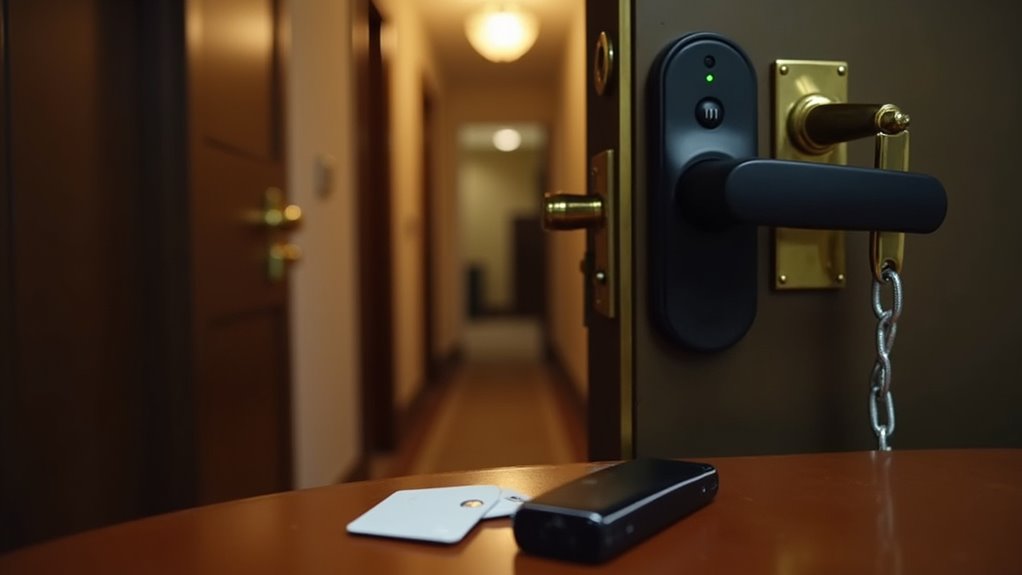
How safe is your hotel room, really? If you’re staying at one of the 13,000 hotels worldwide using dormakaba keycard systems, the answer might make you want to sleep with one eye open. A massive security vulnerability affecting roughly 3 million doors has left hotel guests exposed to potential break-ins using nothing more sophisticated than a $300 device that any determined burglar could buy online.
The worst part? This isn’t some fresh discovery that caught everyone off guard. Security researchers flagged this gaping hole back in September 2022, but more than a year later, only 36 percent of affected locks have been fixed. That means millions of hotel doors are still about as secure as a screen door in a cyclone.

Here’s the kicker – these attacks don’t require some genius-level hacking skills or James Bond gadgetry. Any bloke with a Flipper Zero or even just an NFC-capable Android phone can potentially create two dodgy keycards: one to rewrite the lock’s data, and another to swing that door wide open. It’s like leaving your house key under the doormat, except the doormat is visible to anyone with basic tech knowledge. These vulnerabilities have persisted for an astounding 36 years or more, making it one of the longest-standing security flaws in hospitality history. The attack specifically targets the MIFARE Classic cards used in these systems. Additionally, smart toys can also collect data, raising concerns about privacy and security for children. In a world increasingly reliant on technology, the need for robust security measures has never been more critical. As communities adapt to rising temperatures and shifting ecosystems, the importance of safer infrastructure becomes even clearer, reinforcing the need for effective cyber security protocols. Protecting your smart appliances from privacy threats is essential to safeguarding personal data in this digital age.
The situation isn’t much better in the smart lock market either. Take the KeyWe Smart Lock, selling for $155 on Amazon. Turns out its “smart” security can be outsmarted by a $10 network-sniffing device.
Meanwhile, Tapplock had the audacity to market their product as “unbreakable” with military-grade encryption, right until researchers proved otherwise. Even Nuki, a respected name in smart locks, copped multiple CVE security vulnerabilities faster than you can say “whoops.”

The real shocker isn’t just the vulnerabilities – it’s the glacial pace of fixes. Hotels are dragging their feet on upgrades, possibly because fixing the dormakaba issue requires overhauling everything from lock hardware to keycard encoders.
Meanwhile, manufacturers like KeyWe are claiming they’ve patched problems despite obvious firmware limitations.
For hotel guests, the advice is depressingly old-school: use the chain lock, mate. It’s like we’ve gone full circle, relying on mechanical backup because our fancy digital security turned out to be about as reliable as a chocolate teapot.

The hospitality industry’s got some explaining to do about why they’re still using vulnerable systems that could let anyone with a few hundred bucks worth of gear waltz right in.
The takeaway? Those shiny keycard locks might look flash, but they’re giving guests a false sense of security. Until hotels get serious about upgrading their systems and lock manufacturers stop treating security like an afterthought, we’re all just one crafty burglar away from an unwanted midnight visitor. Sweet dreams, everyone.
Frequently Asked Questions
How Can I Test if My Current Lock Is Vulnerable to This Issue?
Professional locksmiths can properly assess lock vulnerabilities through standardised testing.

Home testing risks damaging locks or creating security gaps. For basic checks, inspect for signs of wear, loose parts, or a sloppy fit. Check if the key moves smoothly or feels rough.
But DIY lock testing isn’t recommended – dodgy methods could wreck the mechanism or void warranties.
Best to get an expert assessment rather than potentially compromising security.
What Brands of Locks Are Most Resistant to This Security Flaw?
For sheer lock security, Mul-T-Lock leads the pack with their drill-resistant cylinders and patented keys that are bloody hard to duplicate.

Schlage’s B60N626 puts up a decent fight too – ANSI Grade 1 rated and built like a tank.
Yale’s got some solid tech-integrated options that ditch traditional vulnerabilities altogether.
Kwikset’s SmartKey tech ain’t half bad either, especially their Obsidian models that laugh in the face of picking attempts.
Should I Immediately Replace All $30 Locks in My Home?
Look, those $30 locks are basically welcome mats for crooks.

But rushing to replace every lock tonight? That’s overkill mate.
Start with main entry points – front and back doors are prime targets.
Prioritise based on risk and budget.

A smart combo of gradual lock upgrades plus cheap reinforcement tricks (door jammers, strike plates) gives way better bang for buck.
Some $30 locks in low-risk spots might actually be fine for now.
Are There Any Temporary Security Measures While Waiting for Lock Replacement?
Look, waiting around for new locks is nerve-wracking, but there’s plenty you can do right bloody now.

Jam a solid doorstop under those doors – the metal ones, not those flimsy rubber things.
Stack heavy furniture against vulnerable entry points.
Chuck a dowel in sliding window tracks.
Even basic door chains or travel locks’ll do in a pinch.
And for god’s sake, don’t forget those secondary entrances – burglars sure won’t.
Can Security Cameras Effectively Compensate for a Vulnerable Lock System?
Security cameras alone can’t make up for dodgy locks – that’s like putting an alarm on a cardboard box.
Sure, studies show cameras deter some opportunistic thieves, but determined crooks don’t care about your fancy surveillance when they can bust through a weak lock in seconds.
Plus, cameras just record the crime – they don’t stop it.
Real security needs proper locks first, then layer on the cameras.
Don’t kid yourself thinking otherwise.