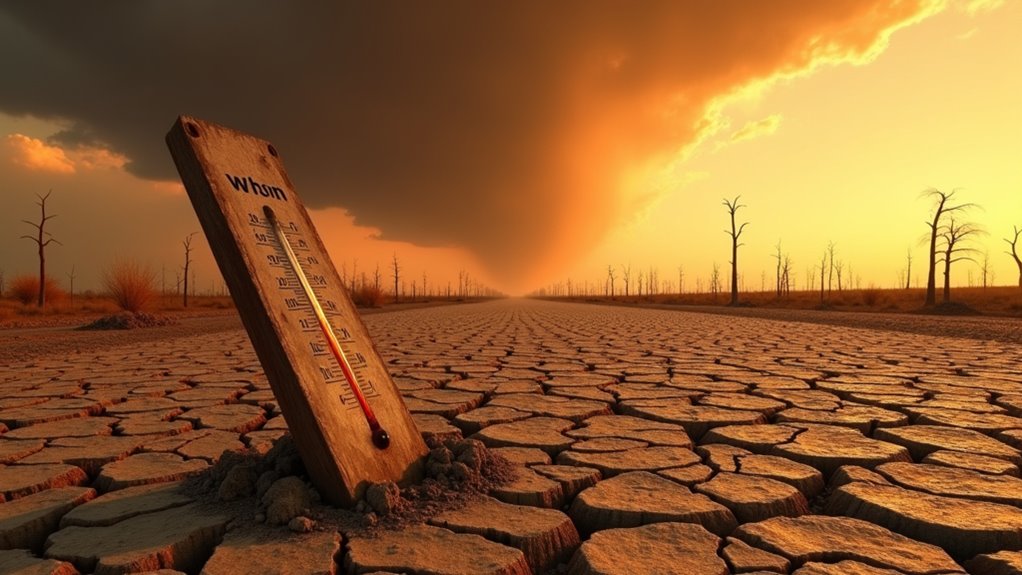

Climate change doesn’t give a damn about political debates – it’s already wreaking havoc on our water systems. By 2071, a staggering 40% of U.S. freshwater basins won’t meet monthly demands. Rivers are drying up, while others flood catastrophically. Toxic algal blooms flourish in warmer waters, and coastal areas watch helplessly as saltwater creeps into their aquifers. Meanwhile, politicians keep arguing whether it’s real. The harsh reality of our water crisis runs deeper than most realise.
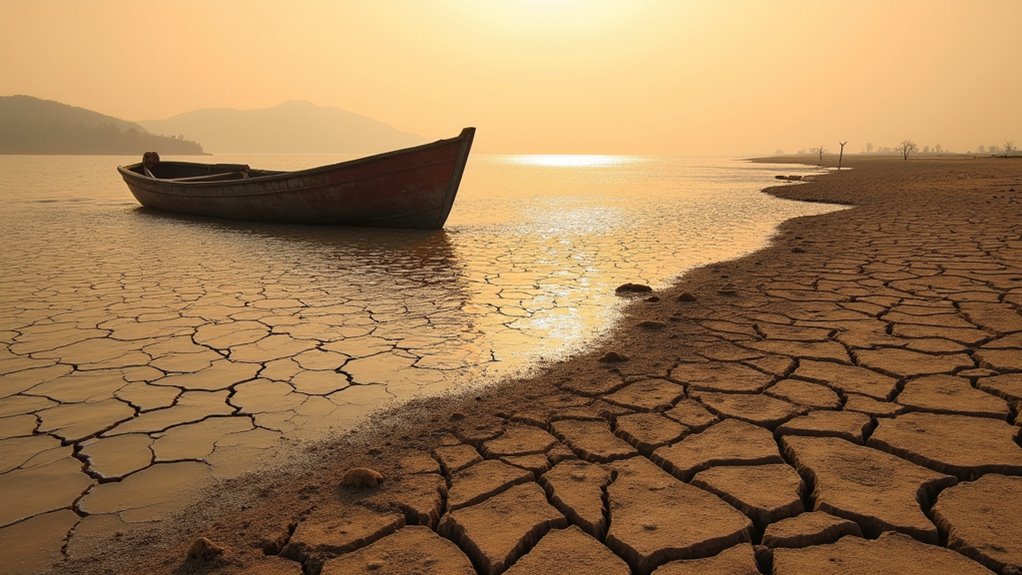
While politicians continue squabbling over whether climate change exists, our planet’s water systems are already copping an absolute hammering. The evidence is crystal clear – our water resources are in serious trouble, and the situation’s getting worse faster than anyone predicted.
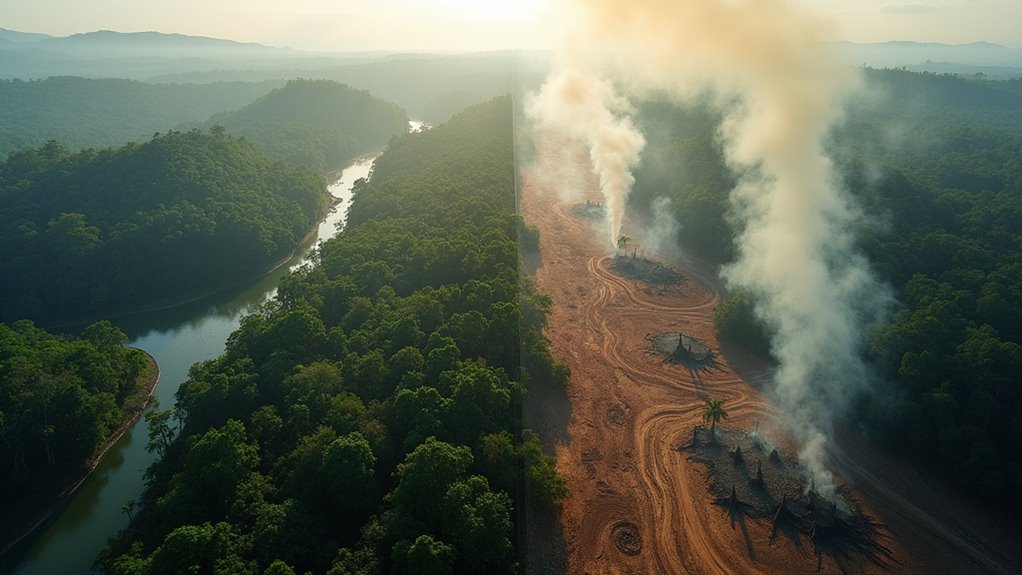
We’re not just talking about a few dry spells here and there; we’re witnessing a fundamental disruption of the entire water cycle that’s been ticking along nicely for millennia. Peatlands and mangroves are crucial natural solutions for carbon storage, yet we continue to destroy them at an alarming rate.

Let’s get real – when temperatures rise, everything goes haywire. Snow’s melting earlier, glaciers are disappearing, and rainfall patterns are becoming more erratic than a kangaroo on a sugar rush. The kicker? These aren’t just minor inconveniences. They’re reshaping entire ecosystems and wreaking havoc on our water supplies. By 2071, forty percent of U.S. freshwater basins won’t meet monthly water demands. Rising temperatures are also linked to an increase in extreme weather events, further impacting water availability.
Rising temperatures aren’t just an inconvenience – they’re completely disrupting Earth’s water systems and transforming ecosystems beyond recognition.
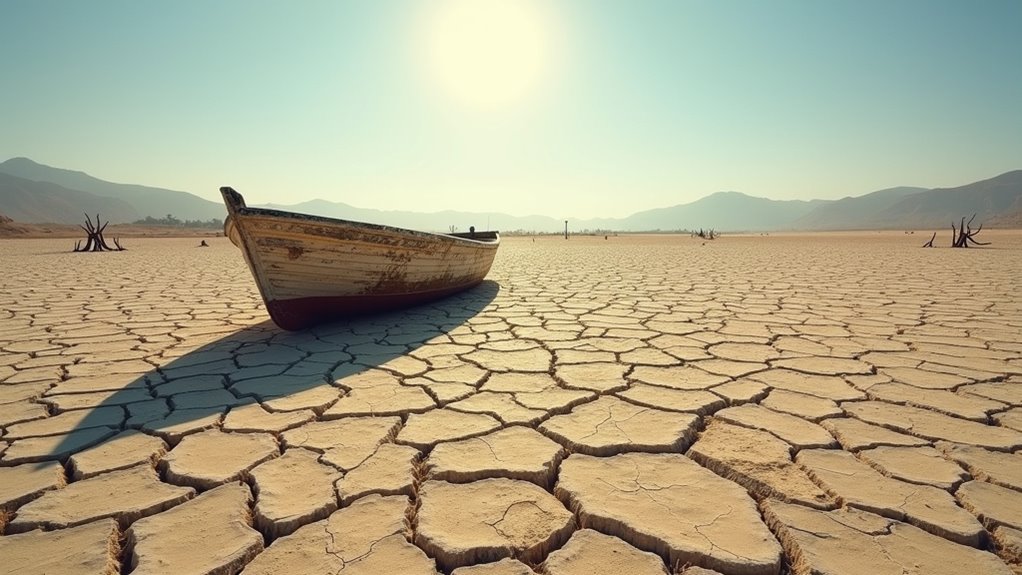
Rivers that communities have relied on for generations are running dry, while others are bursting their banks with unprecedented floods. These changes also result in altered migration patterns, which affect not only individual species but entire ecosystems. Coastal communities are particularly vulnerable as shorelines reshape due to rising sea levels.
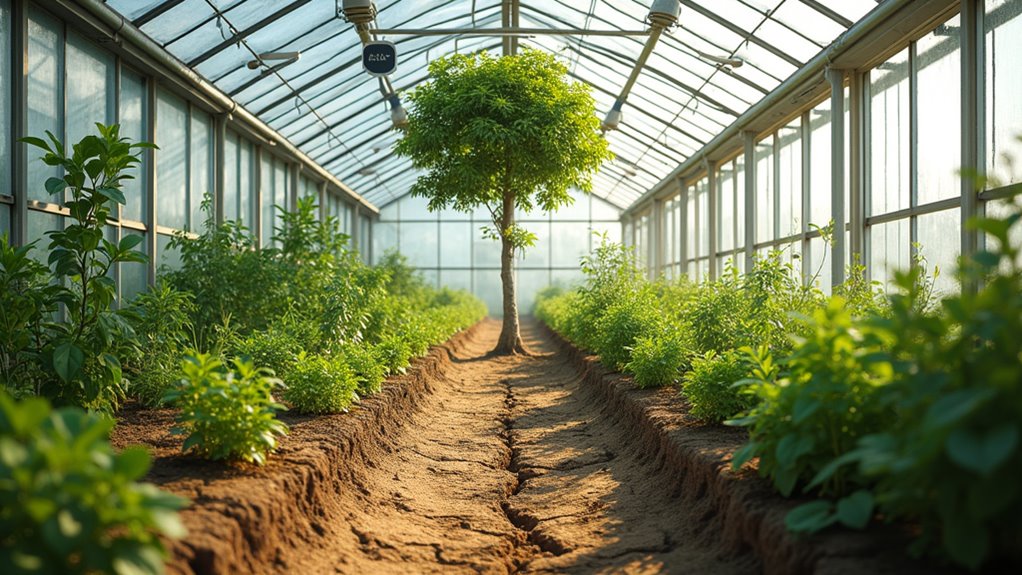
The domino effect is brutal. Agriculture‘s taking a massive hit – farmers are watching their irrigation needs skyrocket while water availability plummets. It’s a cruel joke really – the hotter it gets, the more water crops need, but there’s less of it to go around. Proactive planning in safeguarding water resources is becoming crucial to ensure the resilience of agricultural systems.

Meanwhile, our aging water infrastructure is struggling to cope with these new extremes, and it’s not exactly getting younger.
The impacts on water quality are equally dire. Higher temperatures are turning our waterways into perfect breeding grounds for toxic algal blooms, while more frequent floods are washing all sorts of nasties into our drinking water supplies.
And let’s not forget about coastal areas, where rising seas are pushing saltwater into freshwater aquifers. Good luck growing anything with that.
Here’s the real kick in the teeth – our ecosystems are copping it worst of all. Species that’ve spent millions of years evolving to precise seasonal timing are suddenly finding the rules have changed.
Wetlands are drying up, aquatic species are either adapting or dying, and entire food webs are being thrown into chaos.
Sure, we’ve got adaptation strategies – water recycling, drought-resistant crops, better infrastructure. But let’s be honest, we’re playing catch-up in a race that’s accelerating faster than we can run.

While some regions implement smart water management practises, others are still acting like it’s 1950 and water’s an infinite resource.
The bottom line? Climate change doesn’t give a damn about political debates or economic convenience. It’s systematically dismantling our water resources, and no amount of denial or delay is going to change that fact.
We can either get serious about addressing this crisis now, or we can watch our water security evaporate before our eyes. The choice is ours, but time’s running out faster than water in a broken dam.
Frequently Asked Questions
How Can Individuals Reduce Their Daily Water Consumption at Home?
People can slash their water usage through some dead-simple changes.
Installing low-flow showerheads cuts consumption by 60%, while fixing those annoying toilet leaks prevents wasting 200 gallons daily.

Running full dishwasher loads saves 15 gallons per wash.
Outside, smart moves like watering lawns at dawn or dusk reduces evaporation by 30%.
Using drought-resistant plants slashes outdoor water use by a whopping 50-75%.

Pretty basic stuff, huge impact.
What Technologies Are Being Developed to Create Freshwater From Seawater?
Scientists aren’t mucking around when it comes to turning salty seawater into something drinkable.
Reverse osmosis leads the pack, using fancy membranes to filter out salt – though it’s a power-hungry beast.
But here’s where it gets interesting: new tech’s popping up like solar-powered systems and those wild biomimetic membranes that copy nature’s tricks.
Some clever cookies are even using bacteria and nanotubes to get the job done.
The future’s looking pretty invigorating.
Which Countries Are Most Successful in Water Conservation and Management?
Israel and Singapore are crushing it when it comes to water management – no contest.
Israel’s smashing records by reusing 87% of wastewater and running massive desalination plants, while Singapore’s “Four National Taps” strategy is pure genius.
The Netherlands deserves a shoutout too – they’ve literally changed river courses to manage floods like bosses.
These countries aren’t just talking bout water conservation, they’re revolutionising it mate.
The proof’s in their numbers.
How Do Agricultural Practices Impact Groundwater Depletion Rates Globally?
Agricultural practices are absolutely smashing global groundwater supplies.
The numbers are brutal – farmers are draining 70% of the world’s groundwater, and they’re doing it at totally unsustainable rates.
Major breadbaskets like China, India and the US are the worst offenders, pumping aquifers dry faster than nature can refill ’em.
Over a third of irrigated croplands are now at risk, and we’re still acting like there’s no tomorrow.
What Role Do Wetlands Play in Maintaining Water Security?
Wetlands are absolute champions when it comes to water security – they’re nature’s multi-tasking legends.
These powerhouse ecosystems filter out pollutants like nobody’s business, storing up to 1.5 million gallons of flood water per acre. They’re basically Earth’s kidneys, purifying water and recharging groundwater supplies during droughts.
Plus, they support 40% of global species and feed over a billion people.
Yet we’re destroying them faster than a politician’s promises.