
Solar’s crushing it with plummeting costs and massive growth, while wind’s getting tangled in red tape despite decent numbers. Hydro’s the reliable workhorse nobody talks about, and bioenergy’s making waves in waste management. Geothermal? Meh—too location-specific to matter globally. The real story’s in the numbers: renewables grabbed 90% of power expansion in 2024, outspending fossil fuels 10 to 1. Yet CO2 emissions still crept up, proving there’s more to this story than glossy PR campaigns suggest.
Just how drastically has the renewable energy landscape shifted in 2024? Let’s cut through the PR fluff and look at what’s actually working.
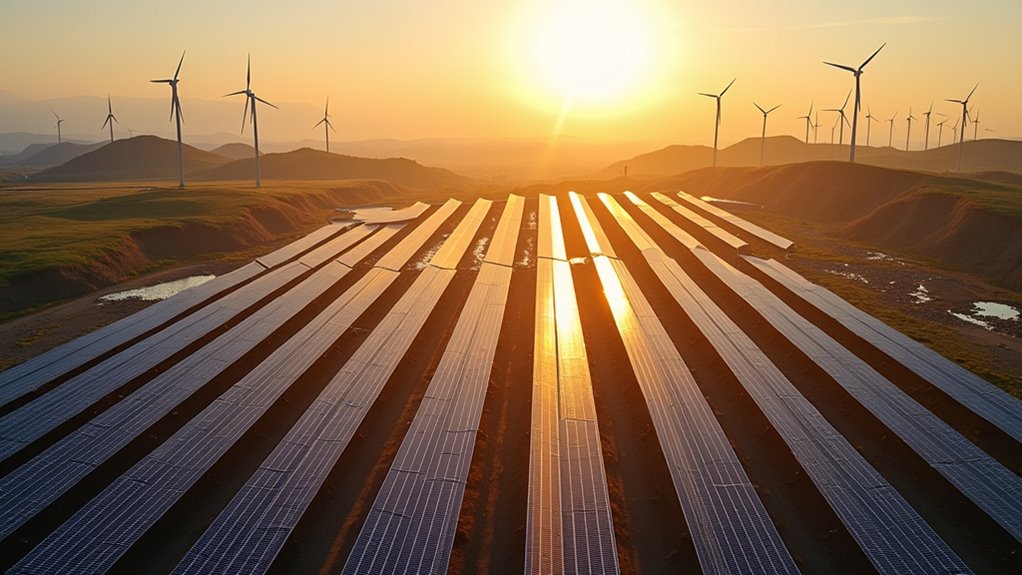
Solar is the undisputed champion, smashing records with a whopping 451.9 GW of new capacity. That’s not just impressive – it’s downright revolutionary, especially considering the 89% cost plummet over the past decade. Anyone claiming solar‘s just a trendy investment hasn’t been paying attention to those 9-cent-per-watt module prices. With output density vastly improving, modern photovoltaic installations now generate significantly more power per square meter than ever before.
Solar dominates renewables with massive 451.9 GW growth, proving skeptics wrong as costs plunge 89% to just pennies per watt.

Wind energy’s got a different story to tell. Sure, reaching 1,133 GW globally sounds fab on paper, but let’s be real – it’s hit a bit of a wall. Permitting issues are throwing spanners in the works, and onshore installations are stuck in neutral. Still, wind’s cranking out 456 TWh in the US alone, proving it’s no lightweight despite the bureaucratic headaches. Smart infrastructure upgrades are increasingly necessary to manage the fluctuating power sources like wind and solar on traditional grids. Installing and maintaining these energy systems is also boosting employment across sectors, with a ripple effect from manufacturing to services.
Hydropower remains the quiet achiever, sitting pretty at 1,283 GW globally. While it mightn’t grab headlines like its flashier cousins, it’s still a proper workhorse of the renewable world. Countries like Ethiopia and Vietnam are jumping on board with 500+ MW additions each, showing there’s life in the old dog yet. Clean energy solutions in these regions are bridging energy gaps and sparking economic growth.
Now, here’s where it gets interesting – bioenergy‘s made a comeback with 4.6 GW of fresh capacity. China and France are leading the charge with 1.3 GW each. It’s not exactly sexy, but turning waste into power while reducing landfill? That’s clever thinking, mate. Clean energy initiatives are creating job opportunities in local industries, showcasing a positive economic impact.

Geothermal’s the odd one out, adding just 0.4 GW in 2024. It’s reliable as your grandma’s cooking, but unless you’re sitting on a volcanic hotspot like New Zealand, you’re probably not gonna get much joy from it. Great if you’ve got it, irrelevant if you don’t. With G20 countries dominating 90.3% of all new renewable capacity additions, smaller nations are struggling to keep pace.
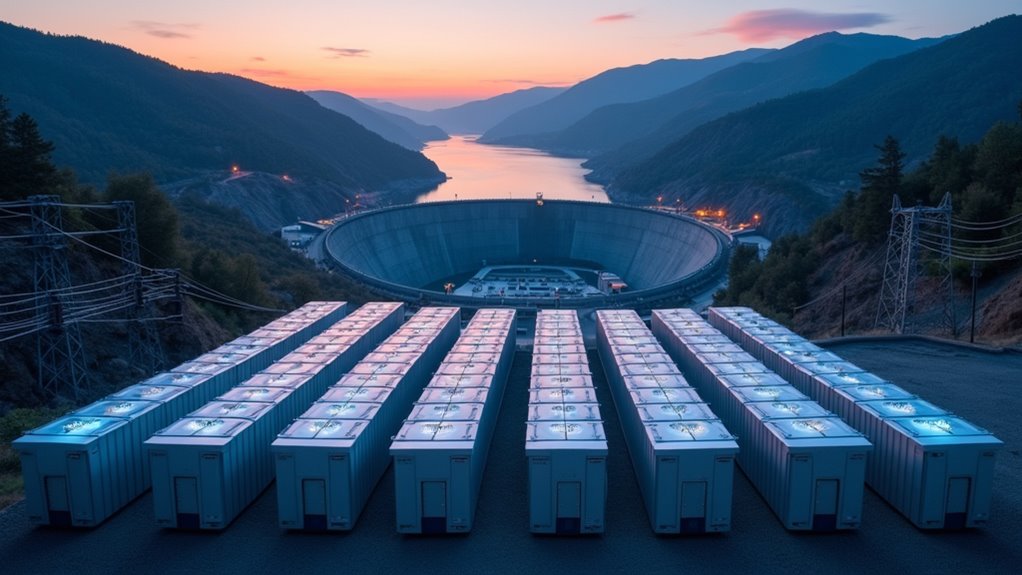
The real game-changer? Energy storage. Grid installations nearly doubled to 170 GWh, and battery storage is set to explode to 30.9 GW. Without decent storage, renewables are like a car without a fuel tank – powerful but ultimately useless when the sun sets or wind drops.
The numbers don’t lie – renewables dominated 90% of global power expansion in 2024, and investment outpaced fossil fuels 10 to 1. Corporate procurement hit 28 GW, proving big business isn’t just greenwashing anymore.

But here’s the kicker – global CO2 emissions still rose by 0.8%. It’s a smaller increase than before, but it shows we’re not quite there yet.
Bottom line? Solar’s crushing it, storage is essential, and everything else is playing catch-up. Some technologies are clearly pulling their weight, while others are just expensive PR exercises. The shift is happening whether the skeptics like it or not, but let’s not pretend every renewable solution deserves equal praise or investment.
Frequently Asked Questions
How Do Renewable Energy Subsidies Affect Market Prices for Traditional Power Sources?
Renewable subsidies are absolutely wreaking havoc on traditional power markets.
Here’s the deal – when govts pump cash into wind/solar, it artificially tanks wholesale electricity prices, especially during peak renewable generation.

This hammers conventional generators right where it hurts – their bottom line.
Many baseload plants are straight-up shutting down cos they can’t compete.
It’s creating a wonky market where fossil fuel plants needed for grid stability can’t stay profitable.
Can Batteries Completely Solve Renewable Energy’s Intermittency Problems?

Batteries alone can’t fully solve renewable intermittency – that’s just wishful thinking.
While current tech handles daily fluctuations decently, seasonal storage remains a massive hurdle.
We’d need ridiculously expensive battery systems (think hundreds of billions) to cover winter lulls or extended cloudy periods.
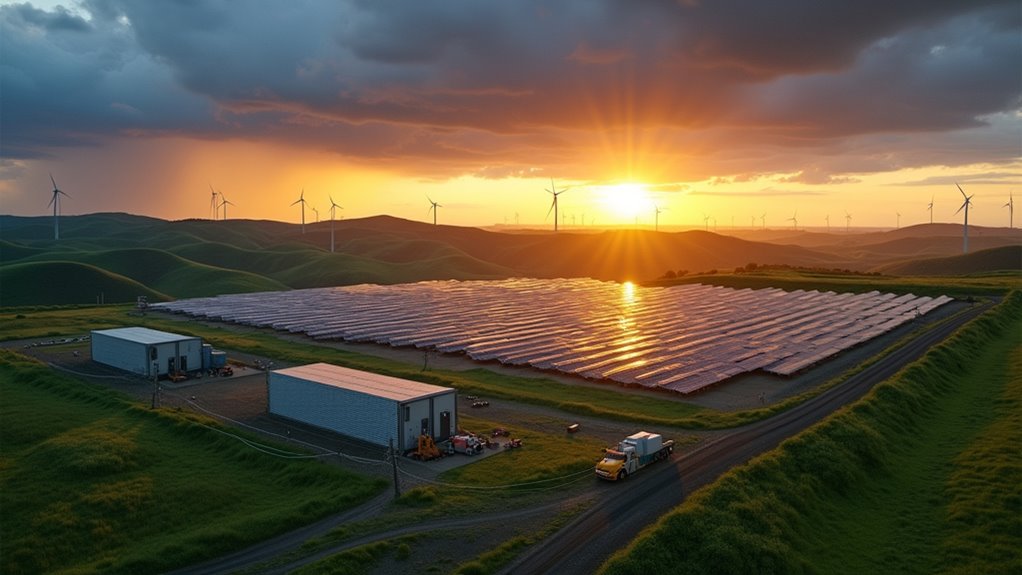
Sure, they’re brilliant for short-term storage and grid stabilisation, but anyone claiming batteries are the complete solution is selling snake oil.
Multiple solutions working together? Now that’s realistic.
What Happens to Renewable Equipment After Reaching End-Of-Life?
most renewable gear isn’t going quietly into that good night.
While 85-90% of solar panels are recyclable, wind turbine blades are a nightmare – massive fibreglass monsters headed straight for landfills.
Batteries? They’re a mixed bag. Some EV batteries get second lives in utilities, but stationary storage is basicly stuffed once it’s done.
The industry’s scrambling to sort this mess out, but right now there’s more PR than actual solutions.
How Do Different Climates Affect Renewable Energy Efficiency and Viability?
Climate’s a game-changer for renewables – no question.
Solar panels sulk in cloudy weather but thrive in deserts.

Wind turbines love coastal areas but throw tantrums during extreme storms.
Hydropower’s basically useless without steady rainfall or snowmelt.
Meanwhile, geothermal sits there smugly, couldn’t care less about the weather.
Each renewable’s got its sweet spot, and picking the wrong one for your climate is like bringing swimmers to a snowfight.
What Role Do Rare Earth Minerals Play in Renewable Technology?
Rare earth minerals are the dirty little secret behind “clean” energy.
They’re absolutely essential for making wind turbines, solar panels, and EVs work efficiently – but mining them is an environmental nightmare.
China’s got the market cornered, producing these materials with practically zero environmental standards.
Here’s the kicker: demand’s set to explode 400-600% in coming decades, but we’re already running short.
Without these minerals, renewable tech‘s basically stuffed.