

The tech to save our planet exists right now—we’re just too busy dragging our feet to use it properly. Wind power‘s already crushing coal, solar panels are getting ridiculously efficient (hitting 30% with fancy new combos), and battery storage is exploding with a 64% surge. Meanwhile, green hydrogen’s getting cheaper and carbon capture‘s ramping up big time. But here’s the kicker: all these innovations mean squat if governments and corporations keep playing their fossil fuel games. Dig deeper to see why time’s running out.
While fossil fuels continue their death spiral, renewable tech innovations are staging a full-blown coup in the energy sector. The numbers don’t lie – wind generation has already kicked coal to the curb, dominating for two consecutive months, and U.S. wind capacity is set to hit a whopping 153.8 GW by 2024’s end. That’s not just progress; that’s a revolution in full swing. The growth in wind capacity has spurred employment across sectors, from manufacturing and construction to services and software, showcasing the widespread impact of green energy. These clean energy solutions are empowering communities, especially in regions with limited or unstable electricity, to bridge energy gaps and spark economic growth.
Solar tech isn’t just sitting pretty either. Perovskite cells are giving traditional silicon panels a run for their money, hitting 25% efficiency. But here’s where it gets really interesting – chuck perovskite and silicon together in tandem cells, and suddenly you’re looking at over 30% efficiency. The integration of AI-powered optimization systems is revolutionizing how solar panels deliver and manage energy output. The industry has created 4.9 million jobs globally, proving that green tech isn’t just good for the planet.
Perovskite-silicon tag team crushes solar efficiency records, proving two heads really are better than one in the renewable energy game.

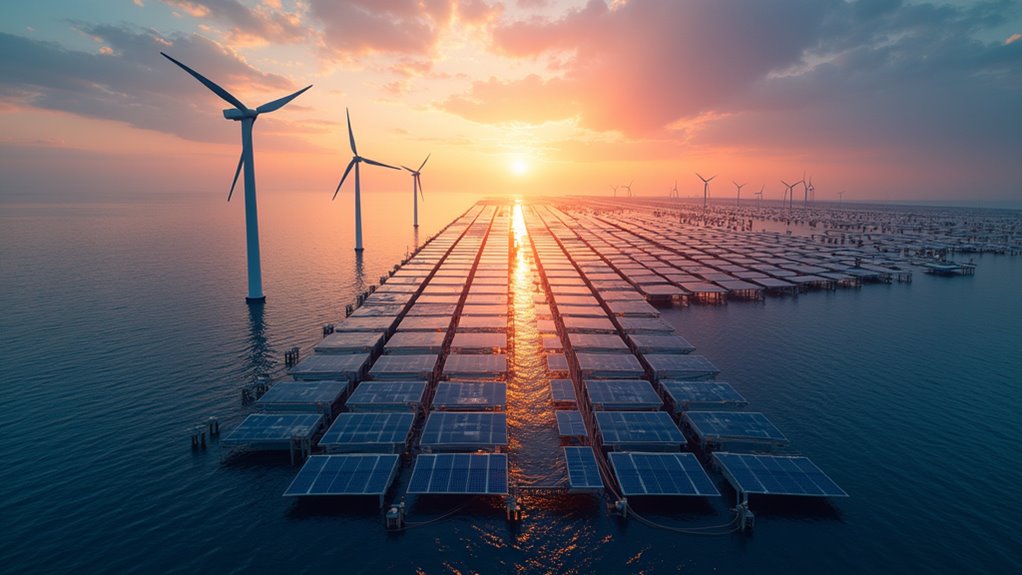
Meanwhile, some genius figured out that slapping solar panels on water (“floatovoltaics” for the fancy crowd) bumps efficiency by another 15%. Who knew water and electricity could play so nice together?
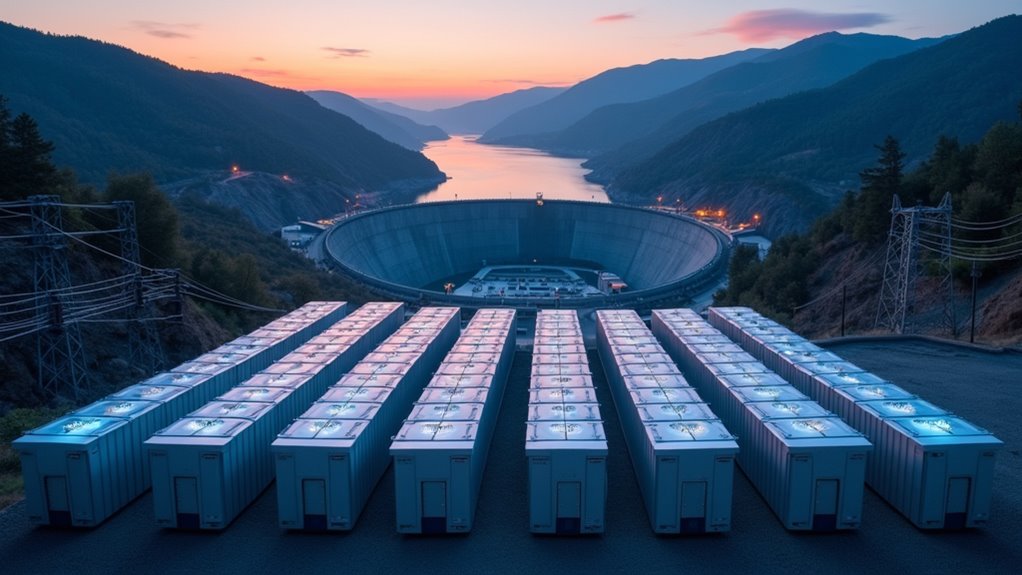
The storage game is getting a serious upgrade too. Battery storage exploded by 64% to 7.4 GW in 2024, and residential solar storage is catching on like wildfire. But it’s not just about cramming more lithium into boxes – sodium-ion and solid-state batteries are promising longer lifespans without the whole spontaneous combustion thing. Thank heavens for that.
Green hydrogen’s making waves, with $3/kg tax credits waiting in the wings. Some clever startups are even hunting for naturally occurring hydrogen, like prospectors in a new-age gold rush. Green bonds are also playing a crucial role, channeling investment into these promising technologies and ensuring the financial viability of clean energy projects.

Meanwhile, AI‘s wormed its way into every nook and cranny of the renewable sector, from running virtual power plants to teaching robots how to deploy solar panels in the desert. Because apparently, even robots need a tan.
Nuclear’s getting a makeover too, shedding its scary reputation faster than a teenager ditching last year’s fashion. Small modular reactors and fusion tech are drawing big tech money like moths to a flame, and environmental activists are actually starting to sing nuclear‘s praises. Who’d have thought?
Carbon capture’s joining the party, with direct air capture plants expected to generate 2.7 GW of demand by 2030. The EU’s not mucking about either, aiming to store 50 million tonnes of CO2 by 2030, while the UK’s throwing £20 billion at the problem. Innovations like hybrid solar-wind farms are also contributing to a more resilient and versatile energy landscape.

Even the yanks are getting serious, pumping over $8 billion into CCS programs through 2026. The tech’s ready and waiting. The science is solid. The numbers add up.
But here’s the kicker – all this wizardry won’t mean a damn thing if we keep dragging our feet on implementation. These innovations aren’t just neat party tricks; they’re our ticket to avoiding climate catastrophe. Time to stop talking and start doing, because mother nature’s patience is wearing thinner than our ozone layer.
Frequently Asked Questions
How Much Does It Cost to Switch a Home to Renewable Energy?
Switching a home to renewable energy ain’t cheap, mate.
A basic solar setup runs $13,500-$16,250 for a 5kW system, while whole-home heat pumps cost another $17,000-$23,000.

Chuck in a battery system ($7,000-$18,000) and you’re looking at $40k-ish before rebates.
The 30% federal tax credit helps, but it’s still a hefty investment.
Worth noting tho – prices have dropped heaps over the last decade.
When Will Renewable Technologies Become Widely Available in Developing Countries?

Look, renewable tech is already spreading like wildfire in developing nations – they added nearly 10% more capacity just last year.
But here’s the kicker: without serious cash flow ($870 billion yearly by 2030), widespread adoption’s gonna take ages.
Sure, costs are dropping and cool innovations like pay-as-you-go solar are helping, but let’s get real.
Without massive investment and proper infrastructure, we’re looking at 2035-2040 for truly widespread availability.
Can Renewable Energy Completely Replace Fossil Fuels in Transportation?
Yeah, renewable energy can totally replace fossil fuels in transport – but it ain’t happening overnight.
The tech’s there: EVs, advanced biofuels, hydrogen cells.
But here’s the kicker – we need a 6-8x boost in renewable production by 2050 to make it work.
Major hurdles? Battery limitations, infrastructure costs, and land use for biofuels.
Plus, energy demand’s gonna jump 25%.

It’s doable, but needs serious tech breakthroughs and policy backing to pull it off.
What Happens to Renewable Equipment After It Reaches End-Of-Life?
Most of it’s actually recyclable. Seriously.
Solar panels? 95% of that glass comes right back.
Wind turbine towers? Pure metal gold mine.
Even those pesky lithium batteries can be stripped for parts.
Sure, some bits are still problematic – like those stubborn wind turbine blades.
But hey, they’re making playground equipment outta those now.
And hydropower gear? That stuff’s basically immortal, lasting 50+ years before needing the recycling treatment.
How Do Seasonal Changes Affect the Reliability of Renewable Energy Systems?
Seasonal changes hit renewable energy like a gut punch.
Solar panels sulk in winter’s short days and get cranky in summer heat. Wind turbines throw tantrums during extreme weather, shutting down when winds get too rowdy.
Even reliable old hydropower gets moody – droughts leave reservoirs gasping while heat waves make water vanish into thin air.
But here’s the kicker: mixing different renewables and smart storage solutions helps smooth out nature’s mood swings.