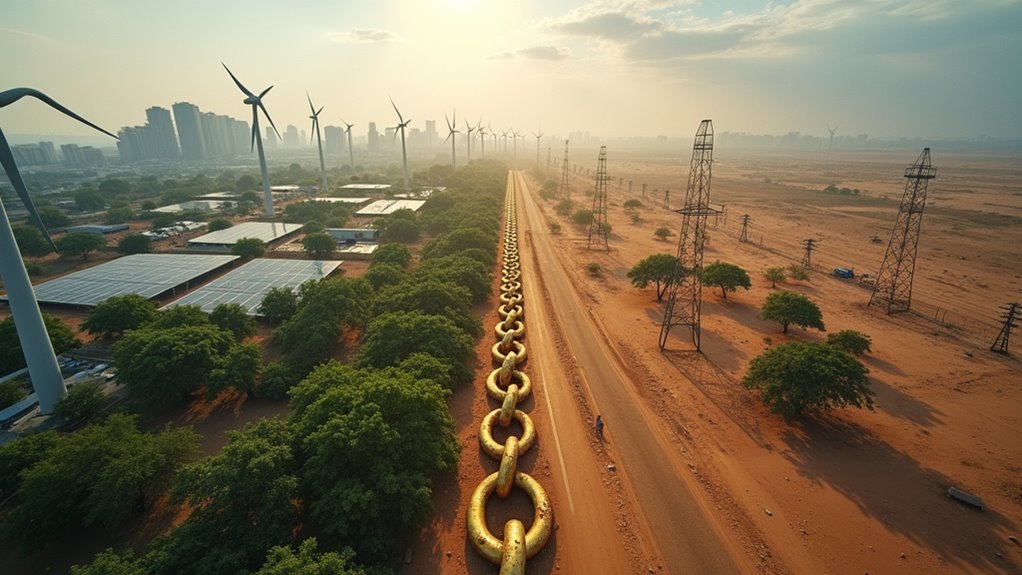


The renewable energy education system is laughably broken. While green jobs grow twice as fast as other sectors, 68% of energy degrees still focus on fossil fuels—talk about being stuck in the dark ages! Schools are churning out theorists when we desperately need builders and doers. Only 1 in 8 workers have climate-relevant skills, despite the $23 trillion clean energy market on the horizon. Time to ditch the textbooks and get our hands dirty with practical training that actually matters.
While universities keep churning out fossil fuel engineers like it’s 1955, the renewable energy revolution is leaving education in its dust. A shocking 68% of energy degrees still focus on fossil fuels, despite renewable energy jobs growing twice as fast as the overall U.S. labour market. At this glacial pace, we won’t hit 100% renewable energy education until 2107 – long after we’re all dead and the planet’s cooked.
The numbers tell a story of spectacular failure. According to LinkedIn’s latest data, only 1 in 8 workers possess skills relevant to fighting climate change. We’ve got 3.5 million Americans working in renewable energy, yet our education system is stuck in the coal age. The global market for renewable tech is barrelling towards $23 trillion by 2030, but universities are treating green energy like it’s some hippy pipe dream instead of the fastest-growing sector in the economy. Reliable renewables in emerging markets have shown the potential to transform communities and drive economic growth. The rise of clean energy jobs is boosting local industries while reducing dependence on volatile fossil fuel markets.
Universities remain trapped in fossil fuel fantasies while the $23 trillion renewable energy revolution races ahead without them.

Here’s the real kicker – renewable energy jobs employ three times more workers than traditional energy sources. In 2022, a whopping 84% of net new electricity generation jobs came from renewable technologies. Meanwhile, our universities are pumping out graduates who know more about oil derricks than solar panels. It’s like teaching typewriter repair in the age of smartphones. The transformation of power grids through clean energy innovations is further testament to the sector’s rapid advancement and essential role in slashing carbon footprints. Innovative breakthroughs in solar cell design have significantly boosted efficiency, paving the way for more effective renewable energy solutions.
The problem isn’t just stubborn academics – it’s about cold, hard cash. Renewable energy education is chronically underfunded compared to its fossil fuel counterpart. Developing countries are particularly stuffed, with barely any green energy faculties or degree programmes. We’re trying to build a sustainable future with one hand tied behind our back. Countries with low energy access consistently show fewer years of schooling and limited educational opportunities.
Look at K-12 schools – only 5.5% of U.S. schools use solar power. That’s pathetic. These installations aren’t just about saving the planet; they’re living laboratories that improve learning environments and give kids hands-on experience with the technology that’ll power their future.

The solution isn’t rocket science (though we could use some of those engineers). We need to redirect funding from fossil fuel education to renewable energy programmes. Fast-track accreditation for solar, wind, and hydro energy degrees. Create practical training programmes that actually teach people how to build and maintain this stuff, not just theorise about it.
The evidence is clear – energy access and education are intimately linked. Countries with higher energy use per capita see more years of schooling, up to about 30-40 GJ per capita. But we’re missing the point if we keep training people to work with yesterday’s technology.
The renewable energy revolution isn’t waiting for academia to catch up. It’s happening now, creating jobs faster than we can fill them. If universities don’t get their act together soon, they’ll become as relevant as a coal mine in a solar farm. Time to stop mucking about and start training people who can actually build the future we need.
Frequently Asked Questions
How Much Does a Renewable Energy Engineering Degree Typically Cost?
A renewable energy engineering degree ain’t cheap, mate.
Bachelor’s degrees typically set you back $25,000-$40,000, while master’s programs hover between $25,000-$35,000.

Top unis like MIT charge around $29k, while places like UMass Lowell offer programs for $25k.
Costs vary based on whether yr studying online, in-state, or at a private institution.
But hey, with median salaries hitting $100k annually, it could be worth the investment.
What Certifications Are Required to Work in Renewable Energy Construction?

The bare minimum? OSHA 10-Hour Construction Safety cert. No exceptions.
But here’s the kicker – serious renewable energy pros stack their credentials like Jenga blocks. NABCEP certs are gold for solar work, while electrical licenses (Journeyman or Master) are non-negotiable for most installations.
Wind techs need GWO or AWEA certifications. Plus, everyone needs basic First Aid/CPR.

The more certs you’ve got, the more valuable you become. Simple as that.
Can I Switch Careers to Renewable Energy Without Formal Education?
Hell yeah, formal education isn’t always necessary.
Many folks leverage transferable skills from other industries – especially trades, construction, or electrical work. Apprenticeships and hands-on experience often matter more than fancy degrees.
Key pathways include: volunteering with environmental orgs, taking short certification courses, or scoring internships.
The industry needs problem-solvers and doers more than it needs more theory-focused graduates collecting dust.
Which Countries Offer the Best Renewable Energy Training Programs?
Germany’s crushing it with killer programs at TU Berlin – they’ve got the goods when it comes to hands-on training.
Denmark’s basically Wind Energy Central at DTU. The US isn’t mucking around either, with powerhouse unis like Stanford and MIT leading the charge.
But here’s the kicker – the Netherlands is lowkey dominating. They’re tops for renewable use per capita and their uni programs are proper mint.
Plus, they’ve got mad industry connections for real-world experience.
What Percentage of Renewable Energy Graduates Find Jobs in Their Field?
The hard truth? No thorough global data exists on renewable energy graduate employment rates.
But here’s what we understand: The sector’s booming, with 13.7 million jobs worldwide in 2022. Solar’s leading the charge, growing 27% by 2031.

Yet employers are screaming for qualified workers – 86% say finding talent is difficult.
The disconnect? Many graduates lack hands-on skills. Unis pump out theory experts while industry needs practical problem-solvers.